Monday, February 4, 2013

Meyer Lemon and Chocolate Tart
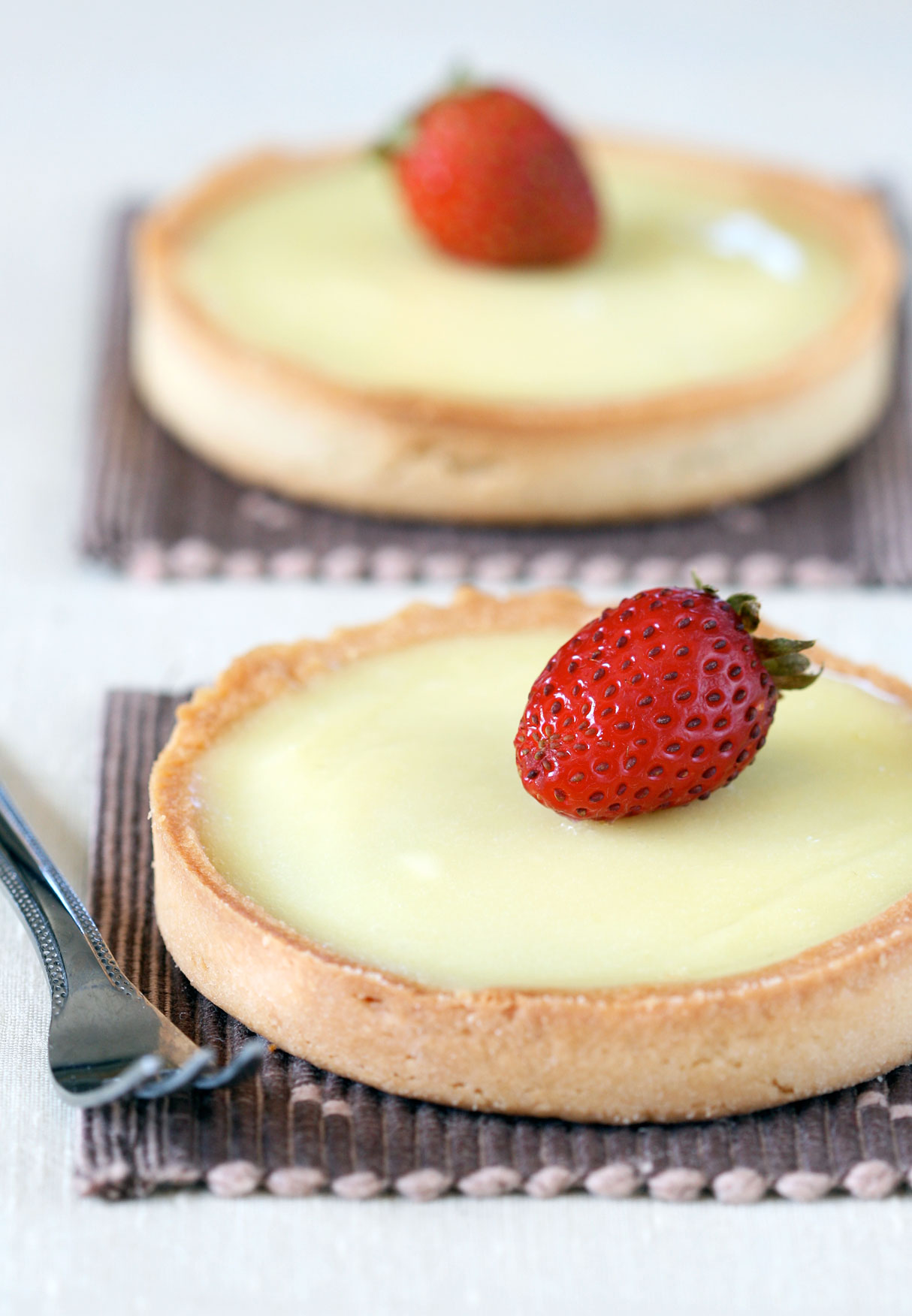

Meyer Lemon and Chocolate Tart


Meyerlemontartsbyanitachudessertfirst 
Whenever Meyer lemons come into season, I always get an irrepressible desire to make lemon tarts. They've always been one of my favorite things to make, and their sunny yellow hue is perfect reflection of the increasingly light-filled days. (We even had a mini-heat wave in San Francisco this weekend, with everyone scrambling to pull sundresses and shorts out from the depths of the closet. Seeing as San Francisco has approximately 2 weeks a year where it's actually hot enough to wear shorts, no one wants to waste those precious days!)
Meyerlemontartbyanitachudessertfirst
My favorite version of lemon tart is based on the first one I ever made out of Pierre Herme's Desserts by Pierre Herme . It's hard to improve on Pierre Herme's genius: a crisp, buttery pâte sucrée tart shell, filled with the most unctuous of lemon curds. Amazing how two such basic pastry fundamentals could combine into something so elementally good; proof that you don't need complicated techniques or multitudes of elements to make something really delicious.
So I felt the same compulsion this year to break out the tart rings when I saw the little nuggets of sunshine popping up at market; this time, though, I also got the urge to change things up a little bit. Gild the lily just a little and dress up the tart for after dinner.
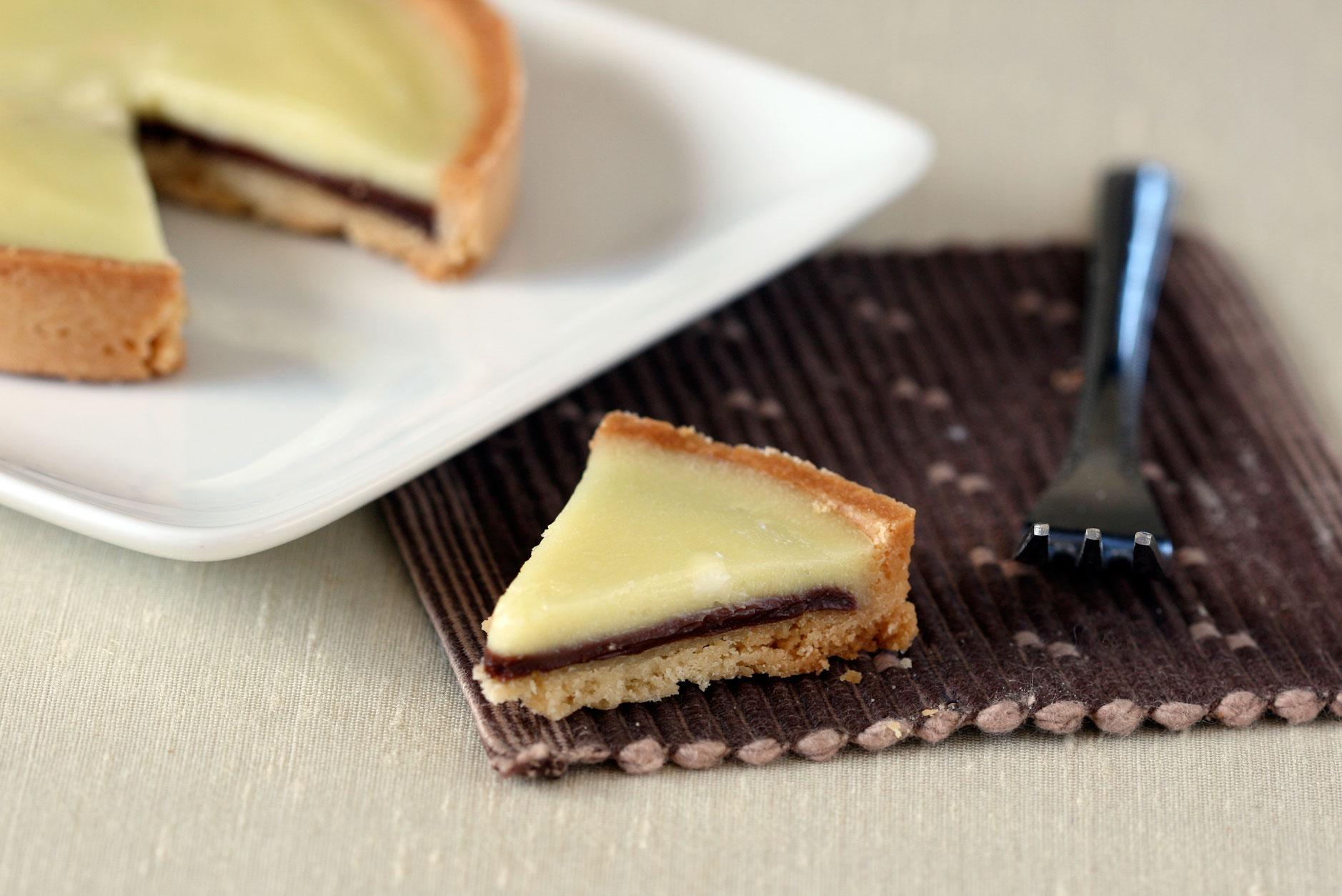
The perfect accoutrement turned out to be a layer of bittersweet chocolate ganache, spread in a thin layer on the bottom of the shell, before the lemon curd is spooned in. At first I tried just a layer of melted chocolate, but when it hardened it was a little difficult to cut through and compromised the wonderful delicate crispness of the tart shell. A velvety, supple ganache provided just the right dark undertones to the cheery bite of the lemon. And since Meyer lemons are a bit sweeter than regular lemons, the chocolate helps ground and highlight the curd – the sunset in wait at the end of every sunny day, perhaps.
Meyerlemonstartringsbyanitachudessertfirst
If you don't have Meyer lemons, regular ones will work just as well. While the tart should be chilled, I find it tastes best when you take it out about 20-30 minutes before serving – it lets the curd soften up slightly and regain and its wonderful addictive, creamy texture. It may be hard to wait that long, but believe me, it's worth it.
Hope your days are turning sunnier and warmer!
Meyerlemontartrowbyanitachudessertfirst 

Pâte Sucrée
makes about 8 tartlets
1 1/4 sticks (5 oz) unsalted butter, room temperature
3/4 cup confectioner's sugar, sifted
1/4 cup almond meal or ground almonds
1/4 teaspoon salt
1/4 teaspoon vanilla extract
1 egg, room temperature
1 3/4 cups all purpose flour
Lemon Cream
adapted from Pierre Hermé's Desserts
makes about 1 1/2 to 2 cups
1/2 cup sugar
zest from 2 lemons
2 eggs
1/2 cup freshly squeezed lemon juice
5 ounces unsalted butter, cut into 1 inch pieces, softened but not melting
Chocolate Ganache
4 ounces bittersweet chocolate
1/2 cup heavy cream
For the pâte sucrée tart shells: Place the butter in a food processor and process until soft and creamy.
Add the confectioners' sugar and process until well blended and smooth.
Add in the almond meal, salt, and vanilla extract and process until well blended.
Add in the egg and egg yolk and process until just blended; scrape the bowl down as necessary.
Add the flour and pulse just until the dough starts to come together into a ball; don't overprocess. The dough will be very soft like cookie dough.
Scrape the dough out of the food processor and make into a ball. Flatten out into a disk, wrap in plastic, and chill in refrigerator for at least 4 hours until it is firm enough to handle.
When you are ready to bake off the tart shells, take the dough out of the refrigerator – let it warm up a bit if necessary but not too much because it will start melting fast.
Roll out the dough between two sheets of plastic wrap to 1/8" thickness. If the dough gets too soft, place back in the refrigerator to firm up.
Place the tart rings you will use on a baking sheet lined with a Silpat or parchment paper.
Cut out circles of dough to fit into desired tart rings. Press the dough carefully into the tart rings and up the sides, being careful not to stretch the dough or it will shrink when baked. Place the rings into the refrigerator to chill for at least 30 minutes. Trim off the excess dough from the top of the rings.
Heat the oven to 350 degrees F while chilling the tart shells. When you are ready, line the shells with parchment and fill with beans or rice to keep the shells weighed down.
Bake shells for about 15-18  minutes until they are lightly colored and the shell feels dry to the touch. Remove from the oven and place on a rack. Remove the beans and parchment and brush the bottoms of the shells with a light egg wash (made from an egg white and a bit of water). Let cool before filling.
For the lemon cream: Create a water bath by placing a saucepan of water over heat to simmer and placing a metal bowl unto the pan so its bottom does not touch the water. Combine the sugar and lemon zest together with your fingers and add to the metal bowl. Whisk in the eggs and lemon juice.
Cook the mixture over the simmering water, whisking constantly, until the cream reaches 180 degrees and thickens. Keep whisking while the mixture is heating up to prevent the eggs from cooking.
Once the cream is thickened – you should be able to make tracks in the mixture with your whisk – take the cream off the heat and strain it into the bowl of a food processor or blender. Let the cream rest for a bit until it cools to about 140 degrees.
Add in the butter pieces a few at the time and combine on high speed. Once all of the butter has been added, let the mixture combine for a few minutes longer to ensure the mixture is perfectly smooth. It is the addition of butter that changes this recipe from a simple lemon curd to a rich, satiny-smooth cream.
Once the cream is finished pour it into a container and let it chill in the refrigerator for about half an hour before assembly.
To finish the tarts: Place chocolate in a bowl.
Bring cream to a boil in a saucepan over medium heat.
Pour cream over chocolate let sit for about a minute. Stir with a wooden spoon to melt and combine chocolate with cream into a smooth ganache.
Spoon some ganache into the bottom of the tart shells and spread into a thin layer. Let set for about 10 minutes to firm up.
Spoon some lemon cream into the tart shells, filling all the way to the top. Shake the tarts lightly to smooth out the cream out. Chill tarts in the refrigerator for about an hour before serving.

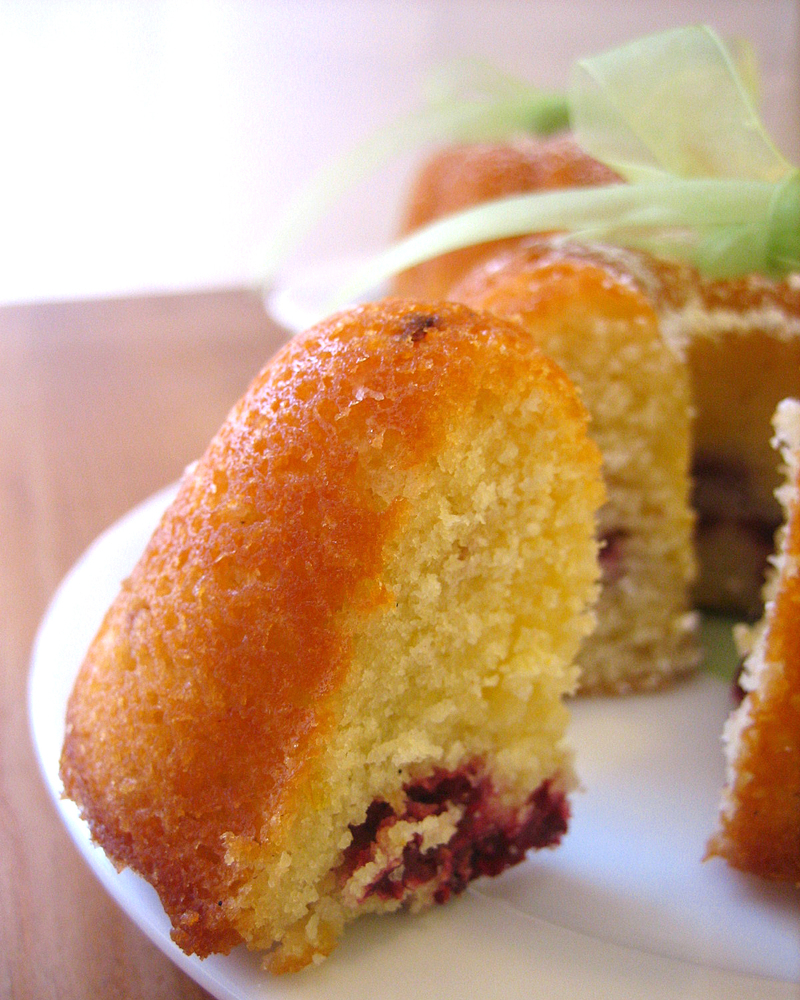
Vanilla Bean Lemon Cake with Raspberries


Vanilla Bean Lemon Cake with Raspberries

Img_1408a
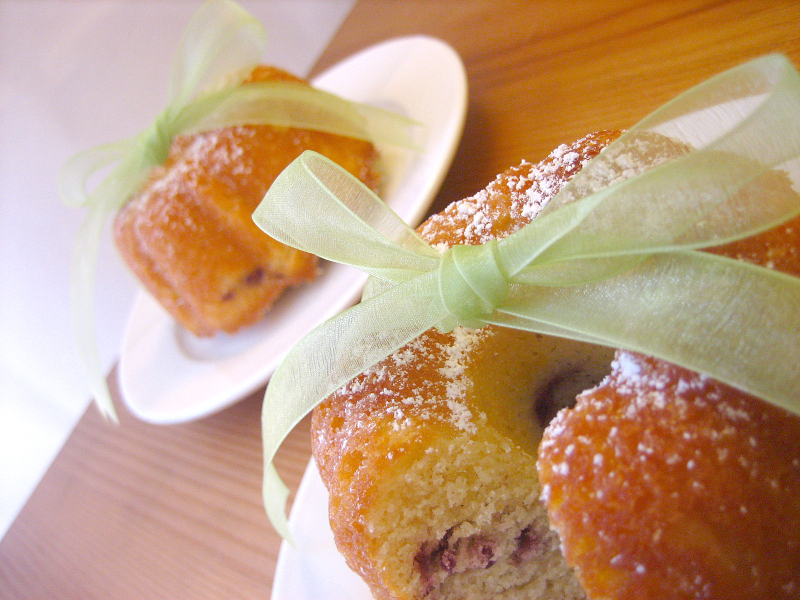
Although I have not succeeded in reducing my pile of recipes to try – on the contrary, it seems to grow longer all the time – sometimes it’s nice to revisit an old recipe and remember what you loved so much about it (Not to mention all the times my friends and family get fixated on one of my desserts and insist on it over and over again, despite all attempts to entice them with new creations). This vanilla bean lemon cake is from a recipe by the Barefoot Contessa and is one of my favorites – I’ve made and devoured it happily many a time. It is a gorgeous example of pound cake: a moist, velvety crumb under a soft golden crust, with a rich, tangy-sweet lemon flavor (it smells so fabulous straight out of the oven). I added some raspberries this time to celebrate summer – not only do they add some pretty color, they make the cake even moister, and the raspberries pair quite well with the lemon. A perfect bite for tea-time.
In trying to shoot pictures of the cake, I was inspired by a talk I attended the night before at the Apple Store – a very fortuitous last-minute discovery of a presentation on food photography! As the Apple Store is but a short walk from where I live, and I had no plans for that hour, it was perfect timing all around.
The store was packed – although I should not be surprised that San Francisco would have an abundance of photography enthusiasts, foodies, and/or both! I was lucky enough to sit near the front and watch a food photography session with food photography Caren Alpert and food stylist Basil Friedman. They had a basic setup with a Canon EOS 30D, a backdrop and a light with diffuser, and proceeded to take a picture of a bowl of pasta. Of course the camera was hooked up to an Apple laptop so all the shots could be instantly projected onto a screen for the audience to see:)
A shot of the setup. You can tell from the poor quality that the lighting really wasn’t that good in that part of the store! Unfortunately, I could not get a copy of the final shot, but go to Alpert’s and Friedman’s websites for some beautiful, mouthwatering examples of their work.
It was fascinating to watch the progress of the shoot, as Alpert and Friedman discussed props, angle, and placement. While Alpert has the photographer’s background and Friedman the chef’s training, the shoot was clearly a collaborative effort as they discussed whether the colors of the napkins went with the food or how the pasta should be arranged.
It was also interesting to hear their insights into professional food photography – for example, how Alpert will often shoot photos for with deliberate blank areas, so that text can be placed there. She stated how she always shoots "full-page", because if she shoots a picture that can be shrunken and put on a corner of the page, that’s what will happen many times! Alpert also said that many magazines have not gone to digital photos yet, which was a surprise to me. Responding to a question from the audience about depth of field, Alpert indicated that many magazines are moving away from the shallower DOF that is so popular now and towards shots with more of the background/surroundings in focus. She did note that she still prefers the shallower DOF, but will shoot both ways for clients for them to choose.
Friedman shared some funny stories and tricks about how to make food look good – when asked about the dilemma of shooting steam, he replied that a classic trick was to have someone smoking a cigarette on set who would blow smoke into the shot! He also remembered a shoot involving coffee where they made the room as cold as possible and brought in a very hot cup of coffee- which created visible steam for about 30 seconds. Perhaps not the most comfortable of shoots!
Img_1417a
In attending the talk, I actually came away impressed with the quality of photography to be found on blogs these days. Professional food photography shoots have oodles of technical equipment and gadgets, a warehouse worth of props, and team of artists – the photographer, the food stylist, the prop stylist, and all the assistants – to create those gorgeous pictures you see on magazine covers. But I look at whatBeaNickyJ, and so many others I don’t have room to list have done all on their own and I think those shots are just as wonderful. In the end, if you have a passion for what you do, it will show through!
Vanilla Bean Lemon Cake with Raspberries
adapted from the Barefoot Contessa
1 3/4 sticks butter, room temperature
2 cups sugar
Zest from 4 lemons
4 large eggs, room temperature
3 cups flour
1/2 teaspoon baking powder
1/2 teaspoon baking soda
1 teaspoon salt
1/4 cup lemon juice
3/4 cup buttermilk, room temperature
1 teaspoon vanilla bean paste
1-2 cups raspberries, depending on how many you want
Preheat the oven to 350 degrees. Mix the butter and sugar together in a mixer until light colored and fluffy. Add the eggs, one at a time. Add in the lemon zest.
Sift the flour, baking powder, baking soda, and salt together. Combine the lemon juice, buttermilk, and vanilla in a small bowl.
Add the dry and liquid mixtures to the mixing bowl alternately, beginning and ending with the dry mixture. Mix just until everything is combined.
Pour batter into pans.  This batter with fill two 8 1/2 x 4 1/4 x 2 1/2 loaf pans, or about (24) 3 1/2 x 2 x 1/2 mini loaves, or about (16) 3 1/2 diameter mini bundt pans as pictured – it’s a lot of batter!
Place raspberries on top of the batter, and using a spoon or spatula, gently swirl them into the batter. I’ve found that if I fold them into the batter sooner, they tend to sink to the bottom of the cake. This method allows for a more even distribution.
Bake until a tester comes out clean -about 45 minutes for a large loaf, 25-30 minutes for minis. Let cool on wire rack.

Vanilla, Chocolate, Framboise Molten Cake


Happy Valentine’s: Vanilla, Tonka Bean, Chocolate, Framboise

molten cake unmolded
Happy Valentine’s Day! This dessert is a little brainstorm I got last weekend when I realized it was three days from Valentine’s Day and I hadn’t thought of anything to make yet. I wanted to take a classic V-day dessert and give it a little modern spin. Molten chocolate cakes came to mind…perennial lurkers on Valentine’s “romantic” menus.
The thing is, there’s a reason why they’re virtually un-banishable from restaurant dessert lineups – customers can’t get enough of them. The idea of warm, molten, gooey chocolate casts its spell on diners previously so stuffed they couldn’t manage another bite. I love warm chocolate cake as much as the next chocoholic, but hey, the internet doesn’t need its 1,838,394th molten chocolate cake recipe, right?
I turned instead to a recipe for warm vanilla cake in Bill Yosses’ The Perfect Finish. There are several snowy-white takes on molten chocolate cake, but this vanilla and white chocolate one is a simple stunner. However, I had a couple tweaks in mind: I’m not a big fan of white chocolate, and I really wanted a dark chocolate center.
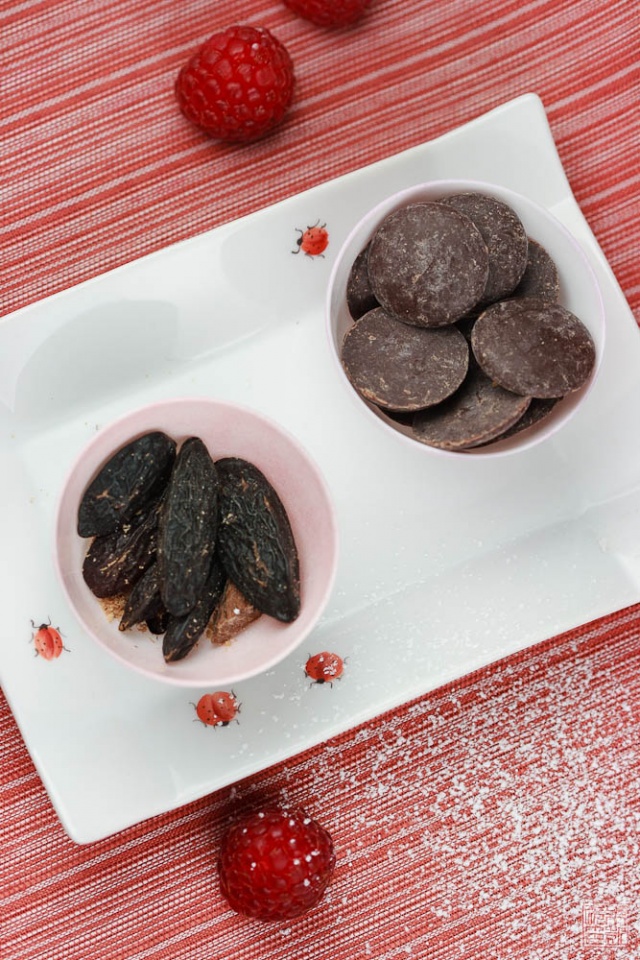
tonka beans chocolate
When I bake with white chocolate, I usually try to balance out its intense sweetness. Use a high quality white chocolate like Valrhona; lower quality white chocolate tends to just taste like sugary chalk. Tonka beans, those South American seeds, add a fragrant, vanilla-almond-nutmeg dose of flavor to the cake batter. When the cakes are baking, the tonka beans give off the most luscious, tropical fragrance – no wonder they’re used in perfumes. Tonka beans are also known as love wishing beans in some magical traditions; if you throw seven tonka beans into a river and make a wish, it will come true. I’d rather use my beans for baking, but at least it makes them Valentine’s-appropriate!
(Note: Tonka beans contain courmarin, which can be toxic in large doses; for this reason, they are banned for sale in the US as a food item. I feel that the amount used in this recipe is small enough that it’s not an issue for most people – unless you’re planning to make these cakes on a regular basis, and eat them all yourself, I think it’s fine. However, if you are concerned, you can always buy some tonka bean oil and just enjoy the fragrance!)
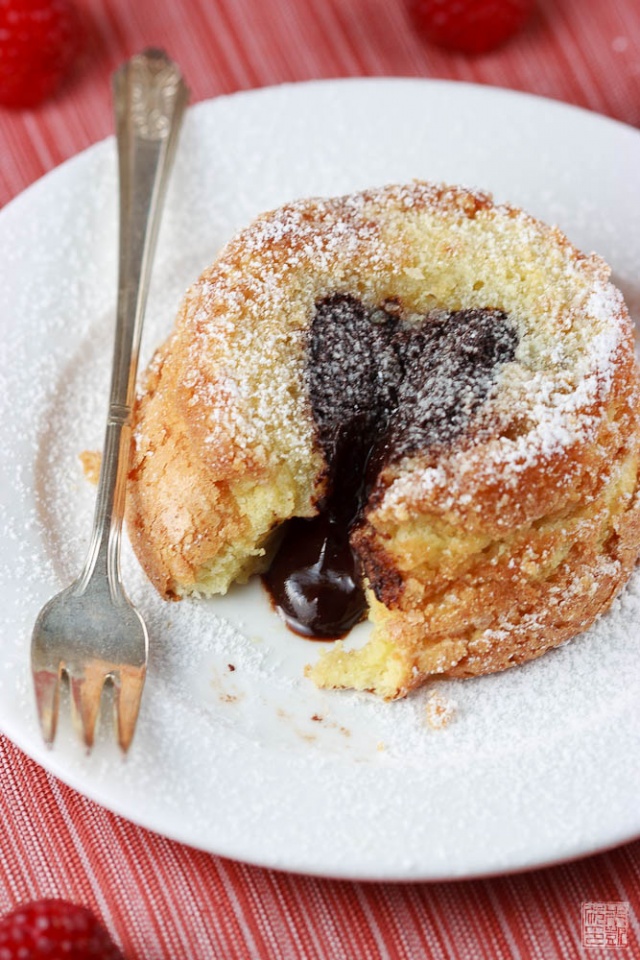
Many molten chocolate cake desserts are made from one batter that, baked properly, will remain liquid in the center. Others have you place a ball of ganache in the center of the cake batter before baking. My version falls on the more-complicated side since I make a ganache of bittersweet chocolate, cream, and framboise, then stick it into the batter, but I think it’s worth it. The dark chocolate mixes nicely with the tonka bean and also provides further counterpoint to the white chocolate, plus I love raspberry and chocolate, so I couldn’t resist the Framboise.
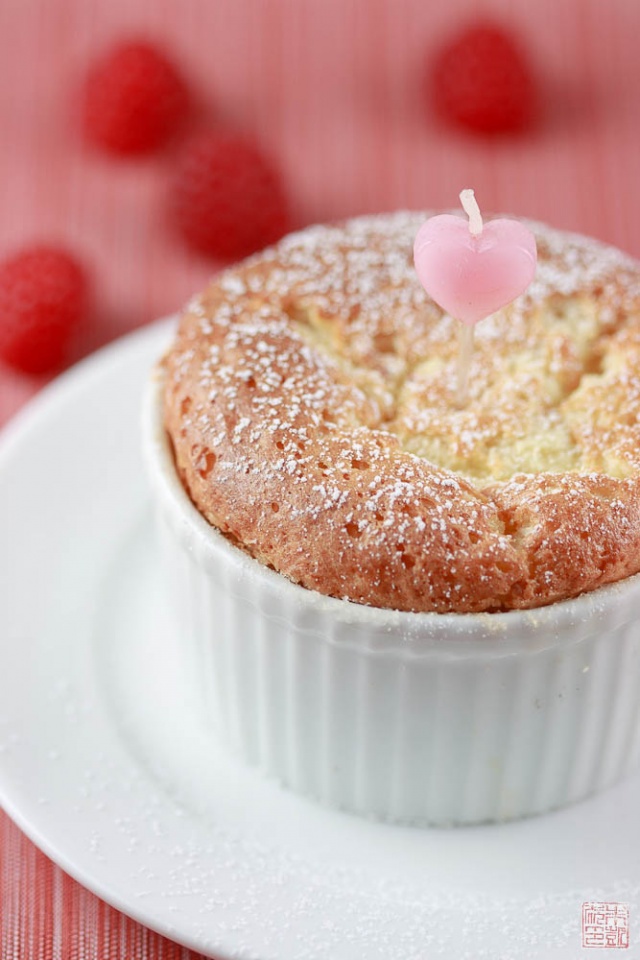
Making molten cakes is all about the timing. I found that 17 minutes was just right for me – the cake had puffed up and mostly set through, while the very interior was still liquid. If you hit the sweet spot (so to speak), some of the batter will still be liquid and will mix with the chocolate ganache to form a swirly ribbon of goodness. Also, be careful not to push the ganache too far into the batter as it tends to sink to the bottom. I happened to capture one cake where the ganache had formed a heart shape on the cake bottom: just right for Valentine’s Day, I guess!
molten vanilla cake
Happy Valentine’s Day – may it be sweet!

Tonka Bean Vanilla Cakes with Molten Chocolate Framboise Ganache

makes about 10 individual cakes

CHOCOLATE FRAMBOISE GANACHE

  • 2 ounces (55 g) semisweet (61%) chocolate, finely chopped
  • 2 ounces (55 g) bittersweet (72%) chocolate, finely chopped
  • 3 tablespoons unsalted butter, cut into pieces
  • 1 tablespoon Framboise

VANILLA TONKA BEAN CAKE

  • 8 ounces (227 g) white chocolate, finely chopped
  • 7 tablespoons (100 g) unsalted butter, cut into pieces
  • 5 large eggs, separated, room temperature
  • 1/2 teaspoon vanilla extract
  • 2 tonka beans
  • 1/3 cup (40 g) all purpose flour
  • 1/8 teaspoon cream of tartar
  • 1/3 cup (76 g) sugar
  • For the ganache: Melt chocolates and butter together in a small metal bowl set over a pot of simmering water, stirring occasionally.
  • Remove from heat and stir in Framboise.
  • Pour ganache into a container and refrigerate until firm.
  • Meanwhile, make the cake batter: combine white chocolate and butter in a large bowl and set over a pot of simmering water. Heat, stirring occasionally, until melted and combined.
  • Remove from heat and whisk in egg yolks, one at a time. The mixture might separate slightly because of all the fat in the white chocolate, but keep whisking and it should come back together.
  • Add in the vanilla extract and whisk to combine.
  • Grate the tonka beans over the batter and whisk to combine. Add flour and whisk to combine.
  • Place egg whites and cream of tartar in bowl of a stand mixer. Whisk on medium speed until whites are very foamy.
  • Add sugar and whisk on high until glossy soft peaks form.
  • Spoon about a third of the meringue into the batter and fold in to lighten. Add the rest of the meringue and fold in carefully to combine.
  • Cover batter bowl with plastic wrap and refrigerate for at least three hours or overnight.
  • When you are ready to make the cakes, preheat the oven to 375 degrees F.
  • Prepare individual ramekins by buttering and sugaring the insides.
  • Fill the ramekins about 90% full. Do not fill all the way to the top as the batter will puff up and may overflow. Place about a truffle-sized scoop of ganache into the center of each ramekin and press in slightly just so it's covered by the batter.
  • Bake for about 17-18 minutes (bake one first as tester to see what the consistency is after 17 minutes - you don't want to overcook these cakes). The tops should be just springy when you pull them out.
  • Run an offset spatula or knife around the sides to loosen the cake. Place a plate over the top of the ramekin and invert cake onto plate. Serve immediately.